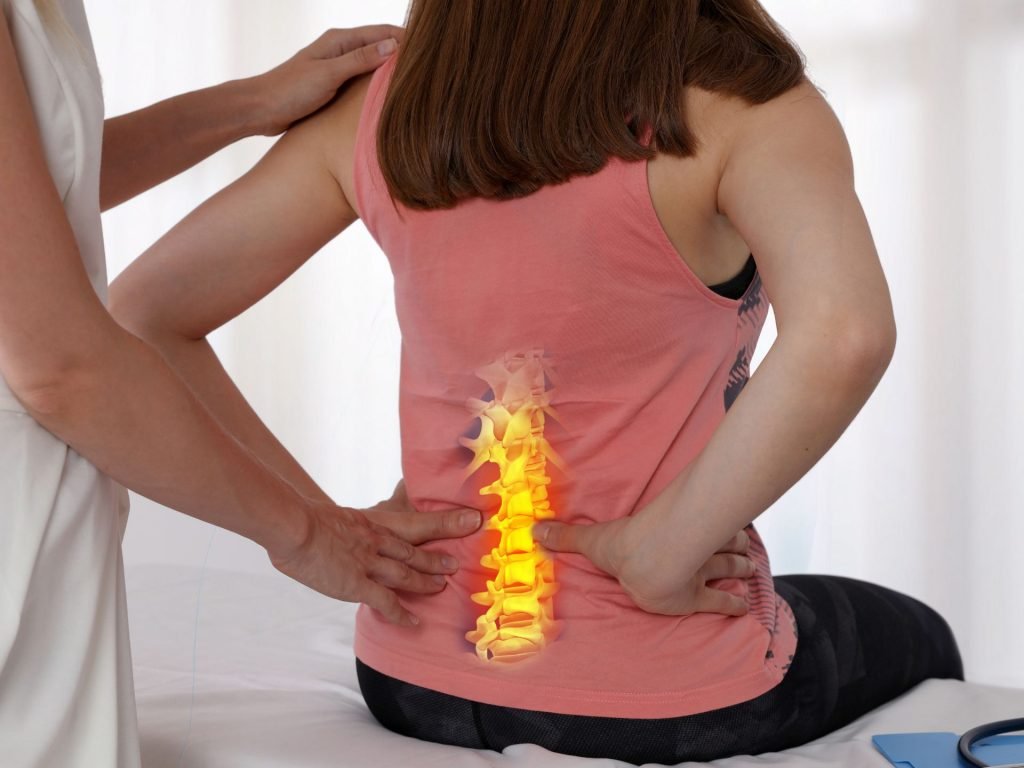
Whether you are walking along the Esplanade in Greenock or simply lifting the groceries, your spinal discs are working hard behind the scenes. These clever structures act as the “shock absorbers” between your vertebrae, playing a vital role in your spine’s functional health.
Think of them as small, fluid-filled cushions that allow your spine to move, bend, and twist. Movement is actually the “fuel” for your discs; it’s what keeps them healthy and hydrated. However, when a disc is injured, it can significantly impact your mobility and quality of life.
Common Types of Disc Issues
Understanding the root cause of your back or neck pain helps take the mystery out of the recovery process:
- Herniated Discs: This occurs when the outer shell of the disc weakens, allowing the inner gel-like material to protrude. This can press on nearby nerves, often leading to pain, numbness, or weakness in the arms or legs.
- Bulging Discs: A bulging disc extends outside its normal boundary but hasn’t ruptured. While some people have no symptoms, others may feel discomfort if the bulge exerts pressure on a nerve.
- Degenerative Disc Changes: As we get older, discs can naturally lose some of their hydration and elasticity. This is a normal part of ageing, but if not managed, it can lead to chronic stiffness.
Proactive Steps for Disc Health
You can protect your discs and stay empowered in your daily life with a few simple lifestyle adjustments:
- Maintain Your Natural Alignment: Good posture isn’t about sitting “bolt upright”—it’s about supporting the natural curves of your spine to prevent unnecessary stress.
- Keep Moving: Regular, gentle activity like swimming or walking in the fresh Inverclyde air strengthens the core muscles that support your spine. Remember: movement is key for disc health!
- Mindful Lifting: Always bend your knees and keep the load close to your body. This protects your discs from sudden, undue pressure.
- Stay Hydrated: Just like the rest of your body, your discs need water to maintain their structural integrity and “bounce.”
How Chiropractic Supports Your Recovery
Chiropractic care offers a natural, drug-free approach to managing disc-related pain. Whether you are dealing with a minor ache or a significant herniation, our “safe hands” are here to help.
We find that combining gentle adjustments with specific, tailored exercises leads to a more sustainable recovery. By restoring alignment and improving mobility, we help your body heal more efficiently.
Ready to start your Recovery?
If you’re struggling with neck or back pain, or you’ve been told you have a disc injury, don’t feel you have to “just get on with it.” We are here to help you get back to your best.
Not sure if we can help? We offer complimentary phone consultations to discuss your situation and see if our care is the right fit for you.
Give us a call on 01475 602 028 to take the first step toward feeling lighter today.